.svg)
Città Alta and Città Bassa: Two Cities, One Bergamo
Most visitors arrive in Bergamo with the same expectation. The upper city, Città Alta, immediately captures the imagination. Rising above the modern town, enclosed by its Venetian walls, it appears almost like a medieval dream suspended above contemporary Italy.
That was certainly my impression when I first visited many years ago.
Yet returning now, 15 years later, I realise that this first impression is only partially true. Bergamo is not a city divided between history above and modernity below. Rather, both Città Alta and Città Bassa contain remarkable layers of culture, art, and memory. The difference lies in how they reveal themselves.
Discovering History Below the Hill
One of the greatest surprises of this visit was how much artistic wealth exists within the lower city.
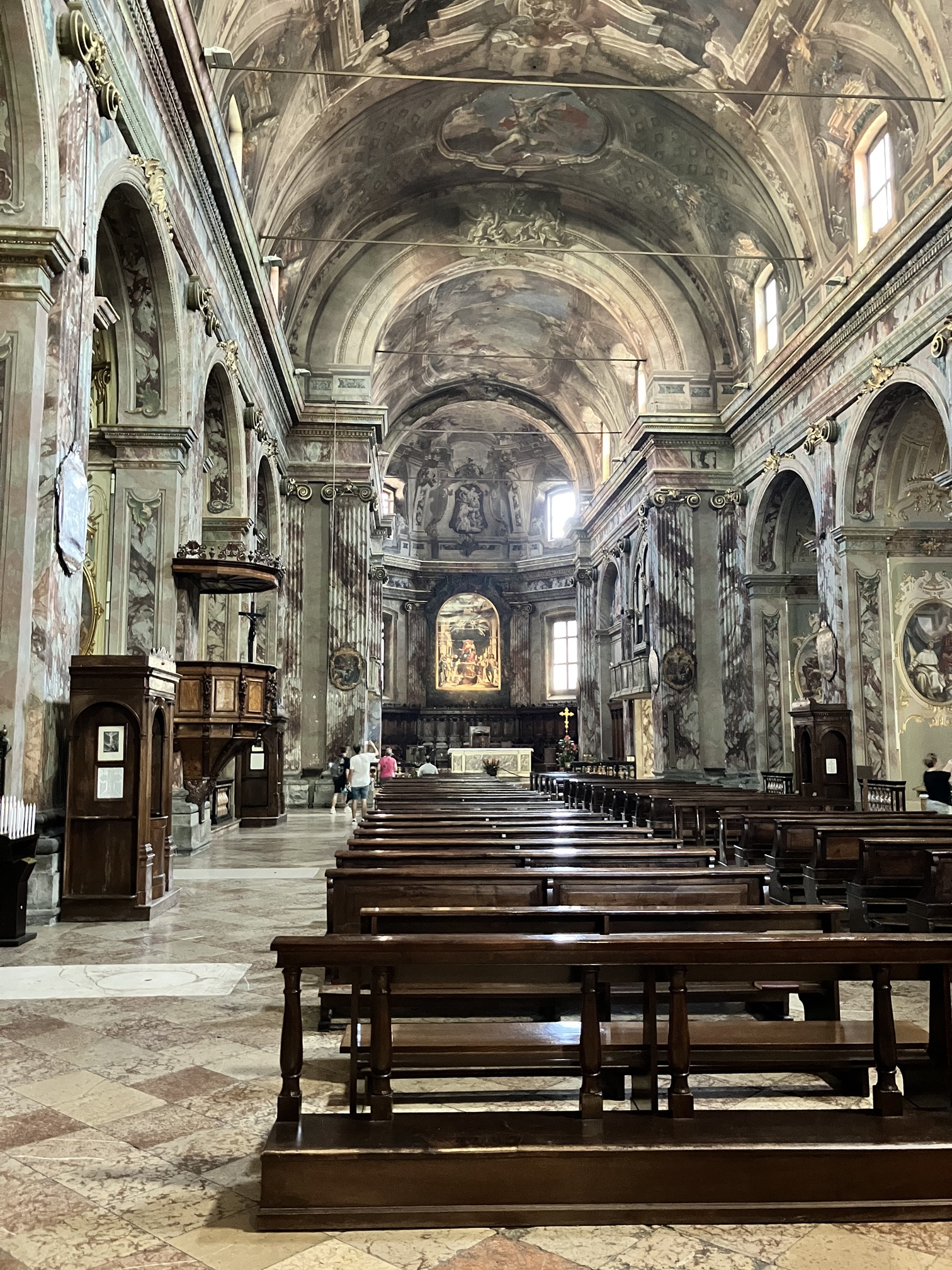
A short walk through Città Bassa brought us to churches containing works that would be considered major attractions almost anywhere else in Europe. In the Chiesa dei Santi Bartolomeo e Stefano stands Lorenzo Lotto's magnificent altarpiece. Only a few minutes away, along Via Tasso, another extraordinary Renaissance masterpiece awaits in the Church of the Holy Spirit.
Perhaps the most memorable moment occurred when we entered the ‘Basilica of St. Alexander in Column’ to admire Lotto's Lamentation over the Dead Christ. Instead of silence, we found a children's choir rehearsal taking place beneath one of the city's great artistic treasures.
That moment felt profoundly Italian: Imagine being introduced to great art not through a museum visit, but simply as part of daily life. Children singing beneath a five-hundred-year-old masterpiece. Culture here remains woven into ordinary existence rather than separated from it.
The Living Middle Ages
If Città Bassa rewards curiosity, Città Alta rewards awe.
Even today, I struggle to think of another city that so successfully preserves the feeling of entering a medieval world. The narrow streets, towers, churches, and defensive walls create an atmosphere that feels remarkably intact.
Yet despite the large number of visitors during the weekend, the city never feels entirely transformed into a stage set, especially during the week which we advice our clients to visit. Daily life continues underneath the tourism. Shops still close according to traditional rhythms. Church services still take precedence over visitors. Local habits continue largely unchanged.
This continuity gives Bergamo much of its character. History is not simply preserved here. It remains lived. And this is why we love bringing our clients to this city, because this is the true authentic italy that will make you feel in love with the country.
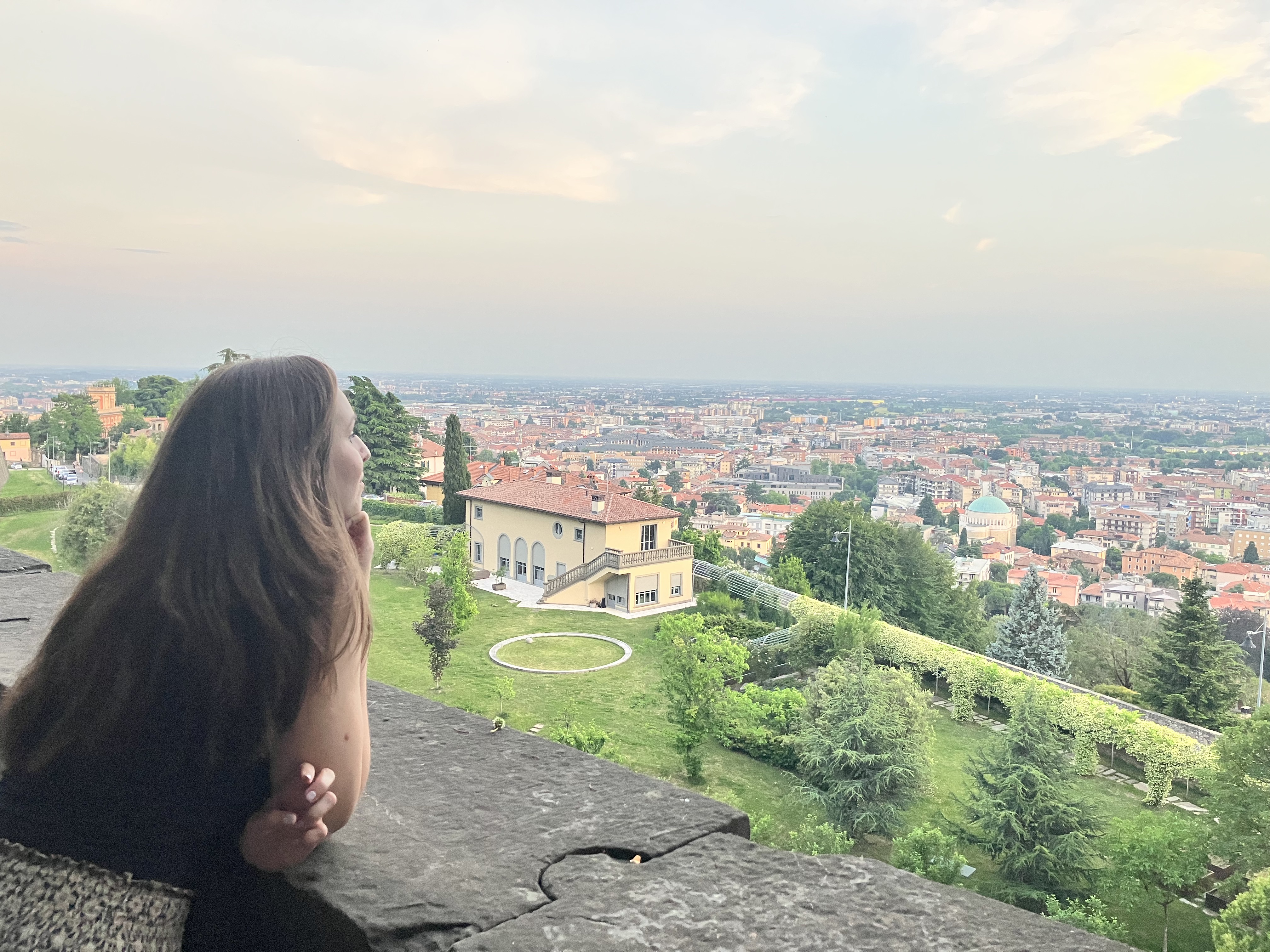
The climb itself contributes to the experience. Whether walking up through the ancient streets or taking the funicular, the ascent alters one's pace. The modern world gradually falls away and attention becomes focused on stone, space, architecture, and views.
A City Built Across Centuries
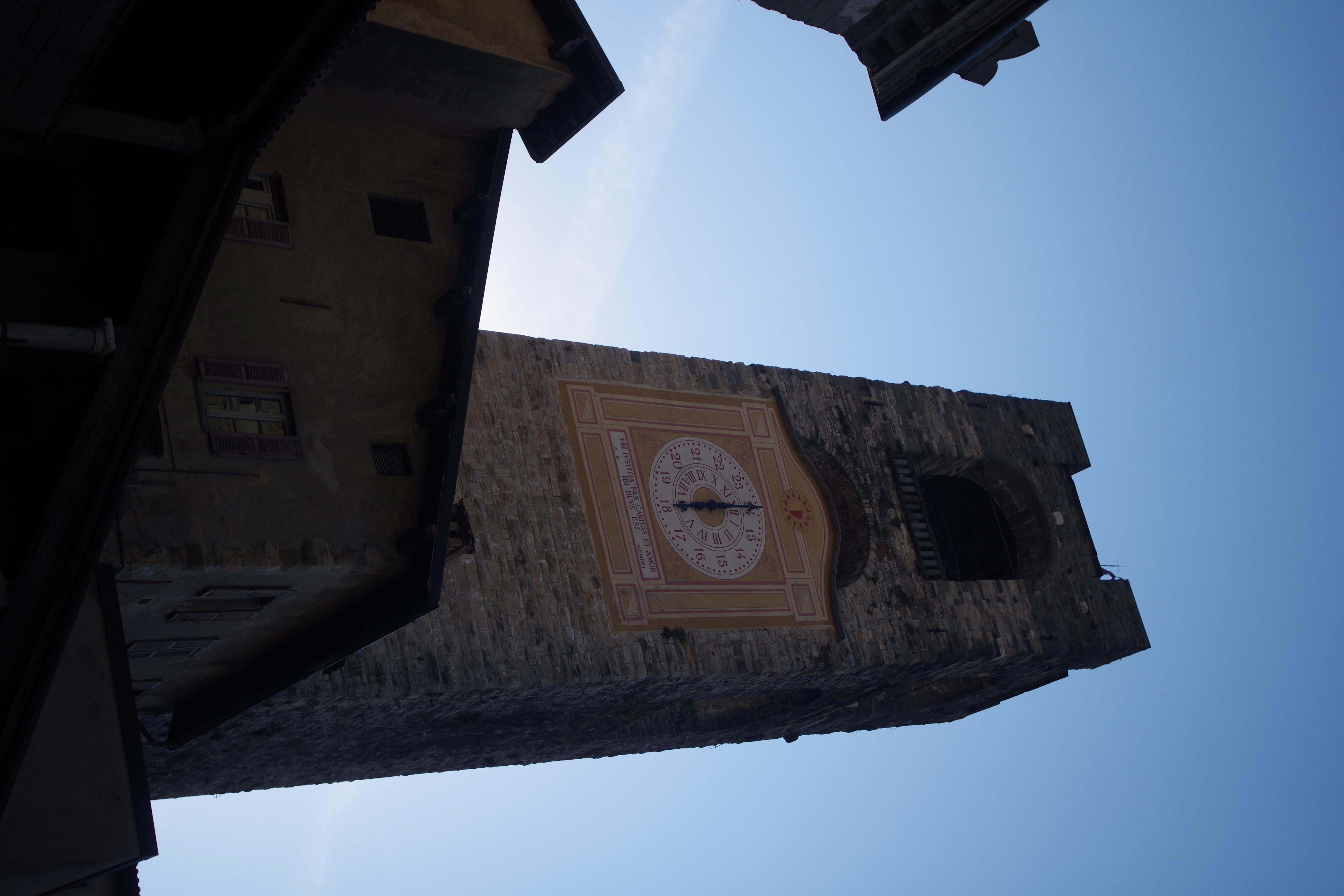
Nowhere is Bergamo's historical depth more visible than around the Piazza Vecchia and the religious complex surrounding it.
Roman remains, medieval towers, Renaissance churches, the magnificent Colleoni Chapel, later 19th century façades, and modern museum spaces all coexist within a remarkably compact area. Each century added something without entirely erasing what came before.
This layering reveals something important about Italy itself: History here is rarely treated as something finished. Each generation contributes another chapter while remaining in conversation with the previous ones.
As our guide Sara explained while walking through the city, even after twenty-five years of guiding she still discovers new inscriptions, weathered stones, and overlooked details that reveal another fragment of Bergamo's story. That observation stayed with me throughout the visit.
A truly great city never finishes revealing itself.
Returning with Different Eyes
Ten years ago I came to Bergamo primarily as a musician and student. I appreciated the atmosphere, the food, the beauty, and the experience of being in Italy.
Today I notice very different things. The historical significance of the churches. The relationship between artists such as Lotto and Moroni. The age of the stones beneath my feet. The continuity between past and present. Most importantly, I understand far better the value of knowledgeable local guidance. Walking through Bergamo with Sara transformed ordinary streets into historical narratives and familiar buildings into cultural landmarks. The city became richer, deeper, and infinitely more meaningful.
That is why Bergamo rewards repeated visits. It is not a city that reveals everything at once. Its greatest treasures are not only its monuments or artworks, but the gradual deepening of understanding that occurs each time you return. The city remains the same. The traveller changes. And certainly in Bergamo, that makes all the difference.
Experience Bergamo Beyond the Postcard
From hidden Renaissance masterpieces to the timeless streets of Città Alta, we'll design a personalized Italian journey that reveals the authentic heart of Bergamo.

Robert Poortinga
Travel Booking Assistant
River cruise & Europe destination expert
Culinary and art travel specialist
Concert Pianist
_Black.png)