.svg)
Meeting Marrakech Through the Eyes of a Local Guide
When I visited Marrakech last November, I quickly realised that seeing the city and understanding it are two very different things.
For two days, Ahmed was our guide, and those two days became one of the most memorable parts of our time in Morocco. Ahmed is the Founder and Secretary General of Morocco’s Authorized Tourist Guides Independent National Syndicate and is the former president of the Association Provinciale des Guides du Tourisme de Marrakech. He did far more than explain the history of Marrakech. He helped us understand why the city looks and feels the way it does, how its traditions developed, how different cultures and civilizations shaped Morocco, and how those layers of history are still present in everyday life.
There was a wonderful rhythm to those days. We moved from the grand history of Marrakech and its remarkable architecture into the smaller details of Moroccan culture, traditions, craftsmanship and daily life. Ahmed had a way of connecting the past with what was happening around us, making the city feel less like something we were simply visiting and much more like somewhere we were beginning to understand.
And then, in the evening, Marrakech changed character.
We wandered through the souk, where the experience became wonderfully lively and unpredictable. There was the bargaining, the conversations, the colours, the craftsmanship and, of course, the food. Gastronomy became another way of understanding Morocco, not simply something to taste but another expression of the country's history and the many cultures that have influenced it.
What struck me most about Ahmed was his genuine pride in Morocco and his commitment to sharing it properly. He speaks about travelers rather than tourists, and after spending two days with him, I understood exactly what he meant. The difference is curiosity: wanting to know not just what you are looking at, but why it matters.
That is also what I value most in a great local guide. A guidebook can tell you when something was built. A good guide can explain what happened there. But an exceptional guide can help you understand the people, traditions and ideas that give a place its character.
Ahmed has spent his career doing exactly that. He has been an official guide in Marrakech since 2007 and has represented the city's guides for many years. His work has also taken him well beyond guiding, including founding Morocco's first National Independent Syndicate of Official Guides.
I wanted to ask him about that experience, but also about the Morocco that visitors don't always see immediately: the traditions that remain important, the relationships between guides, the influence of the many civilizations that have passed through the country, and what it really means to experience Marrakech as a traveler rather than simply as a tourist.
Our conversation offers a fascinating glimpse into all of that, and into the person behind the guide who made our two days in Marrakech so special and gives us a small history lesson in the same time!
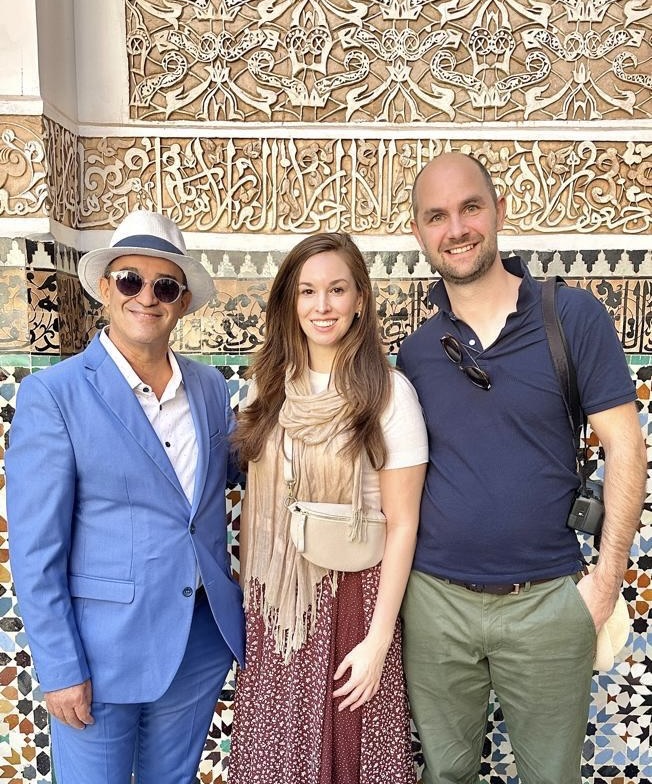
1. You have dedicated many years to introducing travelers to Marrakech and Morocco. What was it about this country and its culture that first inspired you to become a guide?
Besides its beauty, Morocco has always been a melting pot and a crossroads for various civilizations, which accounts for its rich and long history. The Amazighs (its indigenous inhabitants commonly called Berbers), the Phoenicians, the Jews, the Romans, the Arabs, people from sub-Saharan countries had all through the centuries contributed to the forging of the so distinguished Moroccan identity. All these features combined, not to mention the geniality of Moroccans which I am very proud of, « spurred » me to become a guide in 2007 after having spent 19 years as a « white-collar worker ».
2. You are not only an experienced guide, but also President of the Association Provinciale des Guides du Tourisme de Marrakech for over 10 years. What does guiding mean to you personally, and what does it mean to represent the guides of Marrakech?
When I became a guide in 2007 after 19 years spent in different companies as a white-collar worker, I was spotted in a meeting by the former President of the National Federation of Official Guides and President of the Regional Association of Tour Guides and Mountain Guides of Marrakesh Al Haouz as the future Secretary General, a choice which the Executive Committee unanimously endorsed. I took on the task until 2014 and a year later I was elected for four years President of the Provincial Association of the Official Guides of Marrakesh. However, 2022 marked a milestone for guiding when I founded the first National Independent Syndicate of Morocco’s Official Guides in the history of the profession. This strategic decision emanated from my awareness that it was high time to stand out from the National Federation and the Regional and Provincial Associations whose very limited leeway makes it impossible to effectively and efficiently stand up for the social and professional interests of the authorized Moroccan Guides, not to speak of standing in the face of the government’s detrimental so called reforms. My unconditional commitment to the cause of guiding and constant opposition of all government decisions that do not meet the expectations of guides is due to my belief that the latter really deserve the title that the late king Hassan II gave them : « Ambassadors of Morocco ». Being utterly dedicated to my task is a source of pride and honor, which not only enables me to earn the respect and trust of my colleagues but also brings me closer and closer to their hearts, especially those whose hopes are pinned on the Syndicate to defend their rights and affirm their position as a key element in the tourism industry.
3. When we travelled with you, we were struck by the warmth and respect with which guides throughout Marrakech welcomed you. What is the relationship between Morocco’s guides like, and what does that sense of community to the profession?
The relationship between Morocco’s official guides is, roughly speaking, namely based on mutual respect, mutual aid and solidarity. It is this spirit of cooperation that has so far enabled the profession to achieve some remarkable achievements and to become acknowledged as one of the most essential links in what is called « the tourism chain of value ». This acknowledgement echoes a sentence from one of the late king Hassan II’s speeches in which he described Moroccan official guides as « Ambassadors » to the world. In this respect, the major role they play in Track 2 diplomacy is nowadays undeniable.
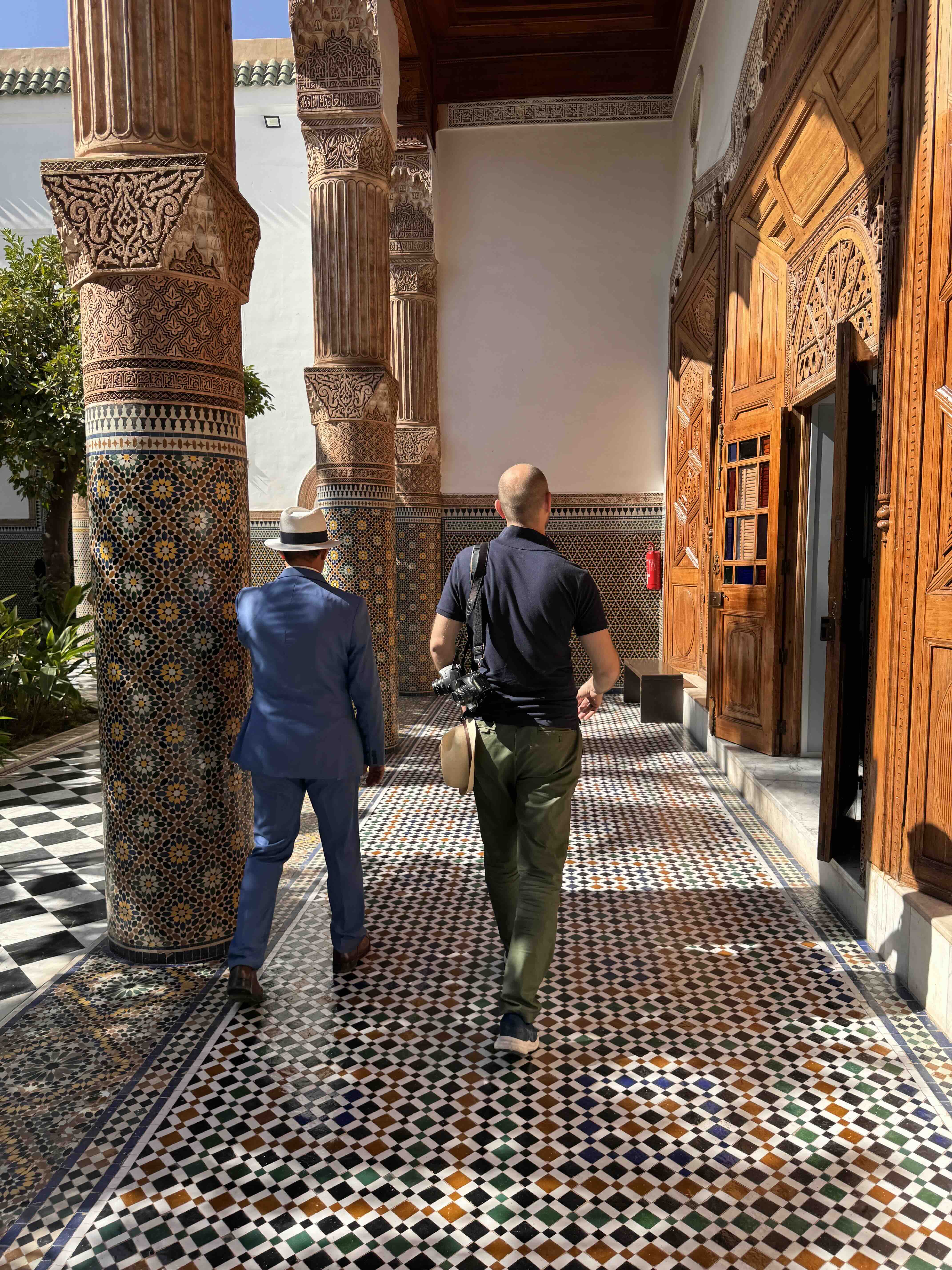
4. You know Marrakech through its history, architecture, traditions, people and everyday life. When you welcome a traveller to the city for the first time, what do you most want them to discover?
You have chosen the right word to describe the people I personally prefer to tour the country with or show around the city. It’s the word « traveler » which, you would certainly agree with me, differs greatly from the word « tourist ». Contrary to a tourist, a traveler is always keen on learning about the culture, traditions, history and all the aspects of social, economic and political lives of the country he visits. Finicky as I am, my motto is « high value-added services » and « off-the-beaten-track » tours and visits. Therefore, whenever I have the opportunity to show such discriminating « guests » around the city, I always see to it that they get the most memorable, instructive and enriching experience through a thorough immersion in the local culture. Interacting directly with the locals, inhabitants -artisans and artists alike- hands-on activities, workshops and special customized topical seminars are some of the most efficient ways to attain that goal.
5. Morocco has been shaped by Amazigh, Arab, Andalusian, African, Jewish and European influences over centuries. How do these different layers of history come together in the Morocco that visitors experience today?
At least ever since the 7th century B.C, Morocco has been a melting pot and a crossroads for the different civilisations you mentioned, some of which contributed to the forging of its identity as previously mentioned. It goes without saying that these civilisations left their prints on Moroccans lifestyle and cultural heritage in general. These influences are still strongly felt wherever you travel in Morocco but namely in the famous « Imperial Cities » (Fes, Marrakesh, Meknes and Rabat) and some of the coastal cities especially the ones where the Phoenicians first established their trading posts starting from the 7th century B.C and the ones the Portuguese occupied as of the 15th century A.D. Evidences of these influences that travelers witness during their stay in Morocco are, for instance, the unique arts and crafts, the folklore, the culinary traditions and even the heterogeneous Moroccan society (diverse lineaments).
6. Every guide develops a personal relationship with the places they introduce. Is there a particular place, story, tradition or moment in Marrakech that remains especially meaningful to you after all these years?
There are in Marrakesh two special historical sites which I particularly hold in so much esteem. These are the iconic Koutoubia mosque and its towering minaret which go back to the 12th century and the awe-inspiring Ben Youssef Medersa, a theological college built in the 14th century during the reign of the Merinid dynasty and completely rebuilt a century later by a monarch from their successors the Saadians. It is for this reason that the visits I conduct always include these two emblematic places of worship and knowledge.
As for traditions, particularly those typical of the locals, there are three which I have always been proud of and that mirror the « Marrakesh Spirit » or the « Marrakesh Collective Awareness »: the spontaneous and genuine legendary hospitality, the remarkable sense of humour and the innate humility.
Last but not least, there is a rich culinary art that is a legacy and blend of both Amazigh, Jewish, Arab, Subsaharan and European traditions. Yet, the most famous and exclusive dish considered as a delicacy is the « Tangia » which is my favorite and which I always enjoy sharing with my traveler guests.
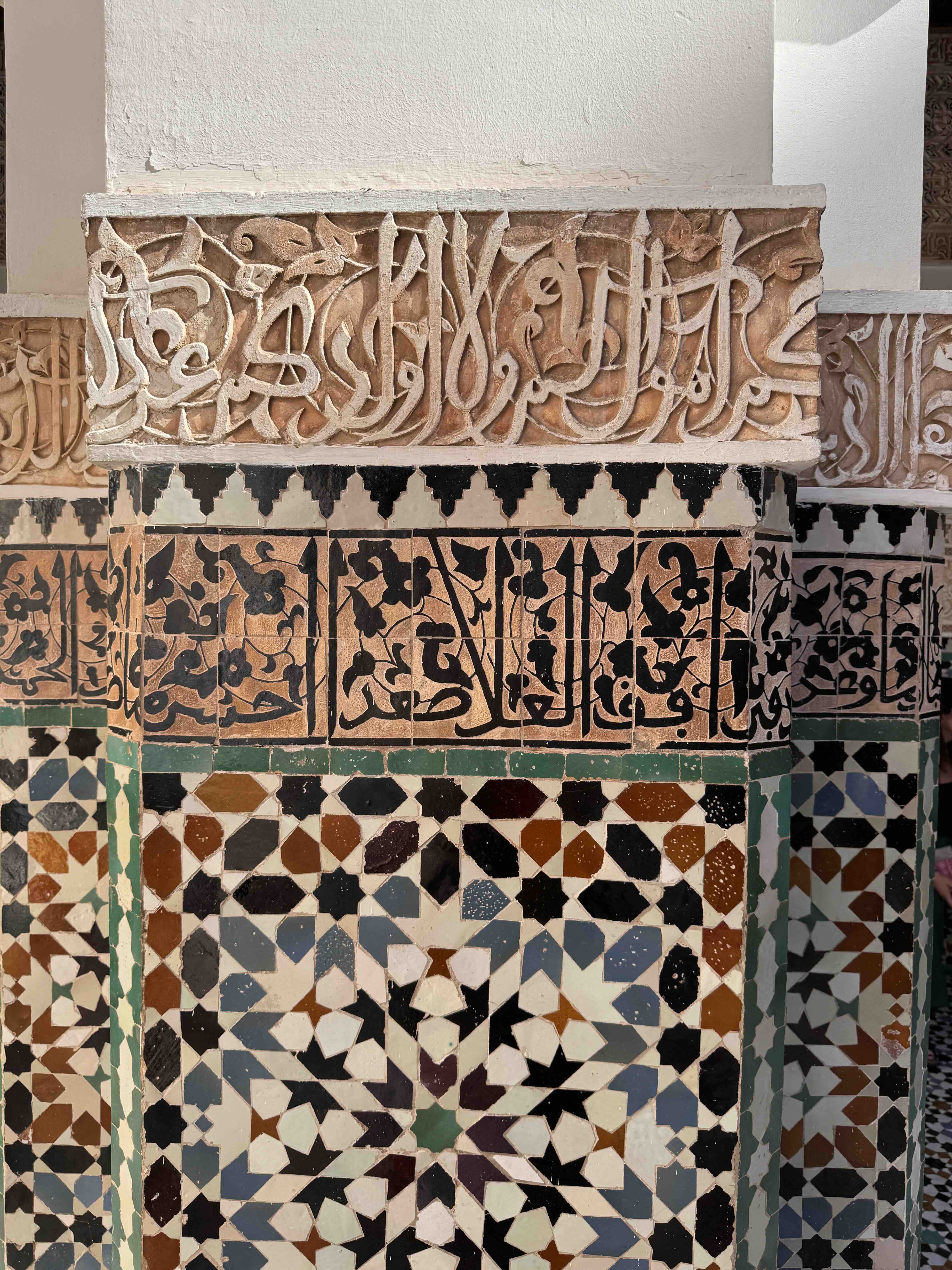
7. What do you believe makes the experience of travelling with an exceptional Moroccan guide so special? Beyond knowledge and history, what can a great guide give a traveller that they could never find in a guidebook?
In this era of unlimited and easy access to information thanks to the internet and AI technology, professional guides are more than ever before expected to take up new challenges and not only meet the demands of discriminating travelers but also anticipate them to, hopefully, exceed their expectations. In this train of thought, since guest satisfaction is the ultimate goal, the personal twist the guide puts into the itinerary is very essential, especially when touring the country with travelers. This can be achieved by recounting unedited history, telling anecdotes and folk stories, explaining cultural idiosyncrasies, arranging direct interaction with the locals of each visited area and providing accurate information. Most importantly, it is the trust relationship the guide establishes with the « guests » and his reflection of true human values that makes their travel experience unique and unforgettable.
8. You have witnessed Marrakech and Moroccan tourism evolve throughout your career. What changes have you found most interesting, and what traditions or qualities of Moroccan hospitality do you hope will always remain at the heart of the experience?
I wonder if you still remember what I told you about tourism being the livelihood of the overwhelming majority of the locals. Roughly speaking, more than 65% of the inhabitants of Marrakesh depend either directly or indirectly on tourism as a source of income. This amazing city, being the epicentre of tourism, attracts investors from around the world, most of whom invest intensively in Hospitality. Consequently, tourism has been booming and hard, soft and tourism infrastructures evolving. With this in mind, some of the negative impacts of tourism are however unavoidable. Fortunately, Moroccans stick firmly to their traditions which are a distinctive feature of this both heterogeneous and homogeneous nation. To name one, the legendary Moroccan hospitality and geniality. In fact, wherever one travels in Morocco, one is warmly welcomed by the locals who are always willing to offer tea and bread at least.
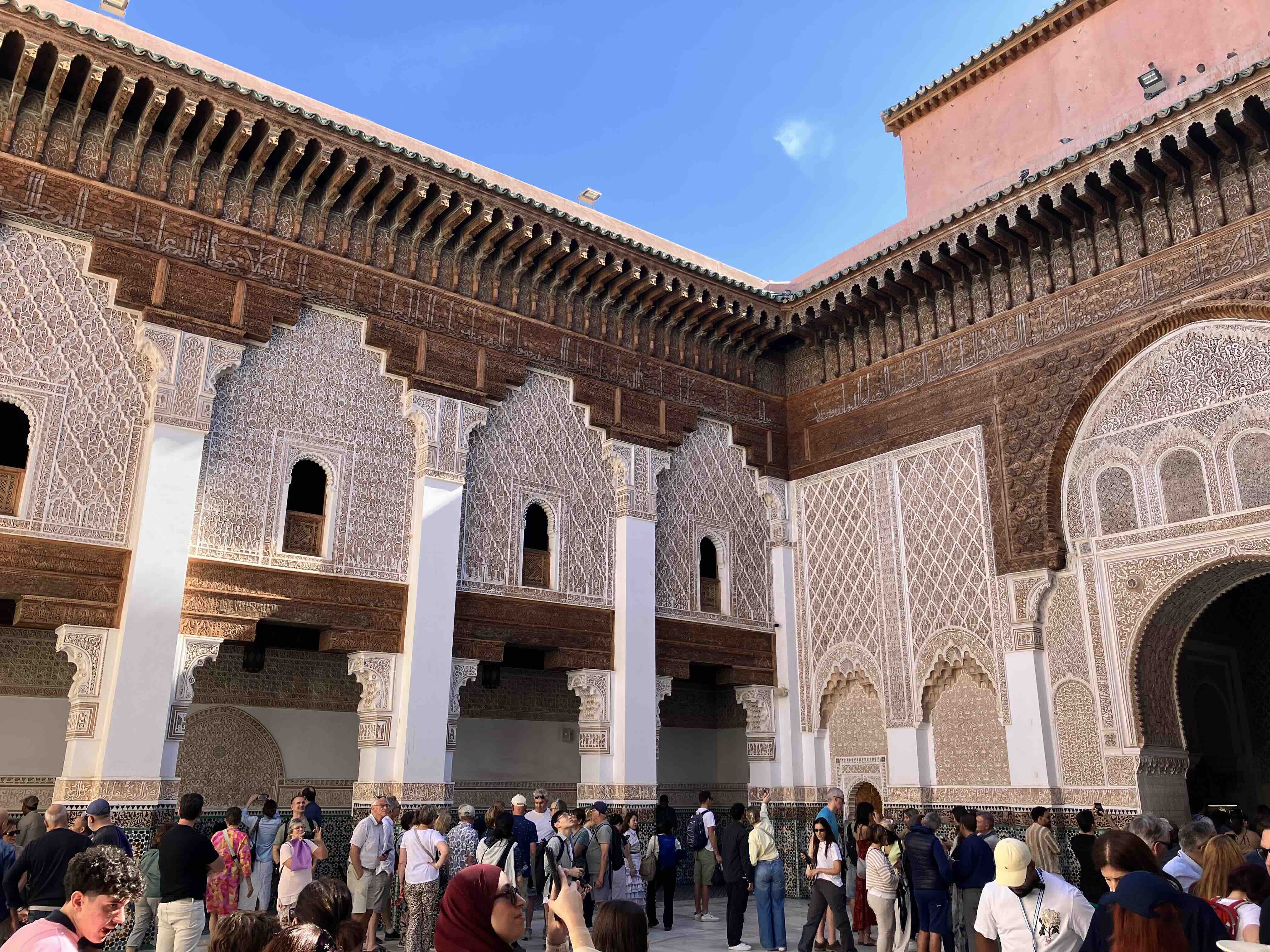
9. Morocco has such a strong tradition of hospitality, craftsmanship, food, art and family life. How can a traveller move beyond simply seeing Morocco and instead experience some of these traditions in a more personal and meaningful way?
A « wise traveler » must definitely be open-minded, unpretentious, willing to accept differences and embrace new experiences, interact with the locals and respect their customs and culture. As concerns Morocco, all these virtues are required to get a better understanding of the mentalities of the people with whom what I personally call « the ideal traveler » mingles and socializes. Many « icebreakers » can be suggested by the guides for a thorough immersion in the different cultures of the natives and open up access to a myriad of hidden secrets and quirks.
10. After spending your career introducing people from around the world to Morocco, what do you hope they carry with them when they leave—and what do you hope they remember most about their time here?
Well, the least I expect from them is to keep good memories of their visit to Morocco but namely the cordiality of its people and to recommend it to their relatives and friends. Actually, I firmly believe that the most efficient and impactful publicity is the one achieved through the word-of-mouth recommendation.
Ready to experience Morocco beyond the guidebook?
Ahmed reminded us that there is a big difference between seeing a place and truly understanding it. That is exactly the kind of travel we want to create.
If Morocco is calling you, we can help you design a journey that goes beyond the famous sights, with the right local people, guides, experiences, food and cultural encounters woven into your itinerary.
Tell us what you are curious about, and let’s start planning your Morocco journey.
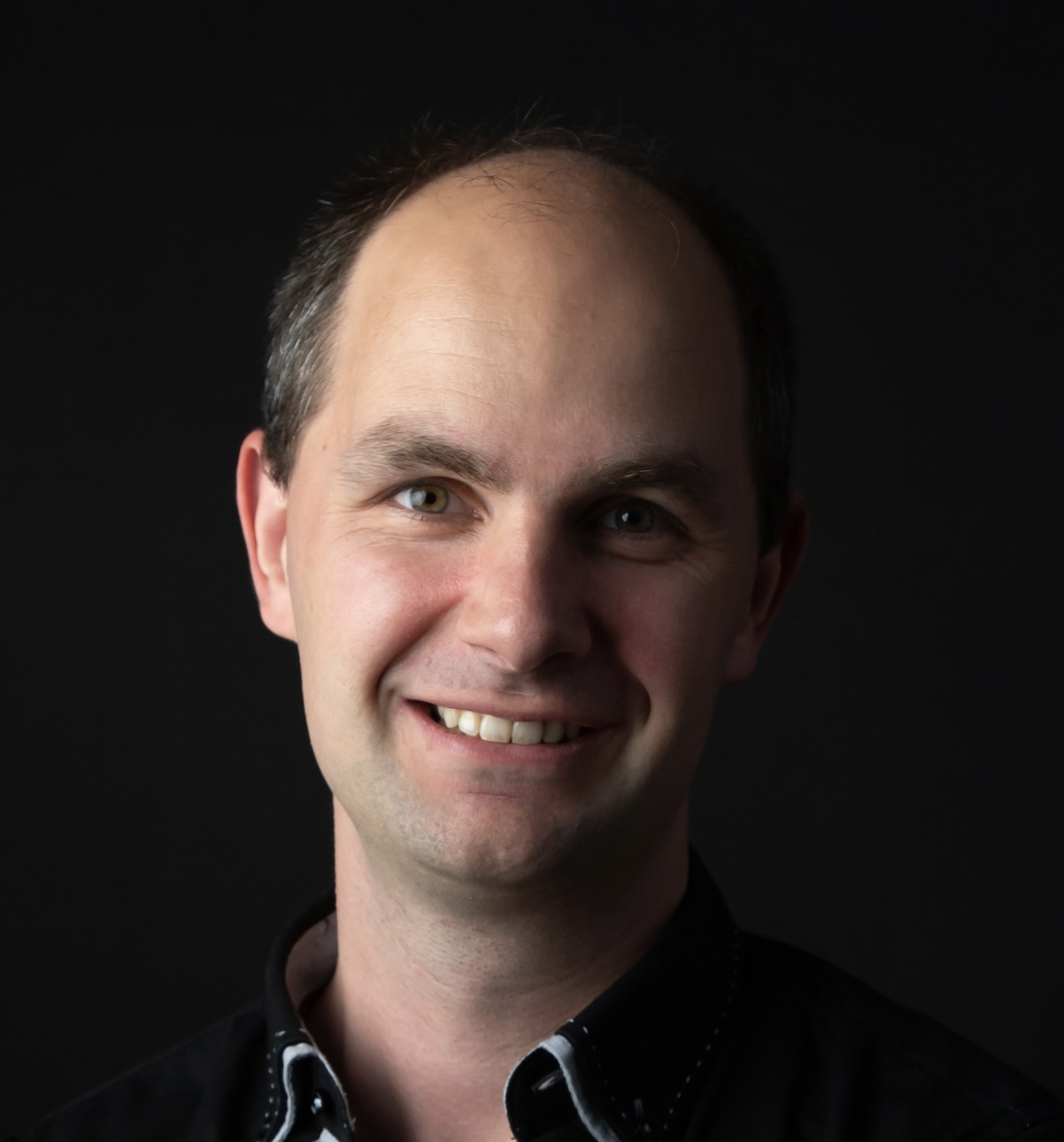
Robert Poortinga
Travel Booking Assistant
River cruise & Europe destination expert
Culinary and art travel specialist
Concert Pianist
_Black.png)