.svg)
Beyond Amsterdam: Seeing the Netherlands Through Art, History and Place
Amsterdam Is Not the Netherlands
I often compare visiting Amsterdam with visiting New York. You can go to New York and say you have seen New York, but you certainly have not seen the United States. Amsterdam is much the same.
Amsterdam is extraordinary. It was one of the great trading centres of the seventeenth century and attracted people from all over Europe for trade, work and, at various times, freedom from persecution. That international character is still one of its defining qualities.
But the Netherlands is much bigger in character than Amsterdam.
Leave the city and the landscape changes quickly. There are quieter towns, traditional villages and countryside that still has a remarkably familiar relationship with the paintings of the seventeenth century. The Hague, Delft, Leiden, Haarlem, Utrecht, Dordrecht and Gouda are all within relatively easy reach. In a small country like the Netherlands, you can see a great deal without spending hours travelling between places.
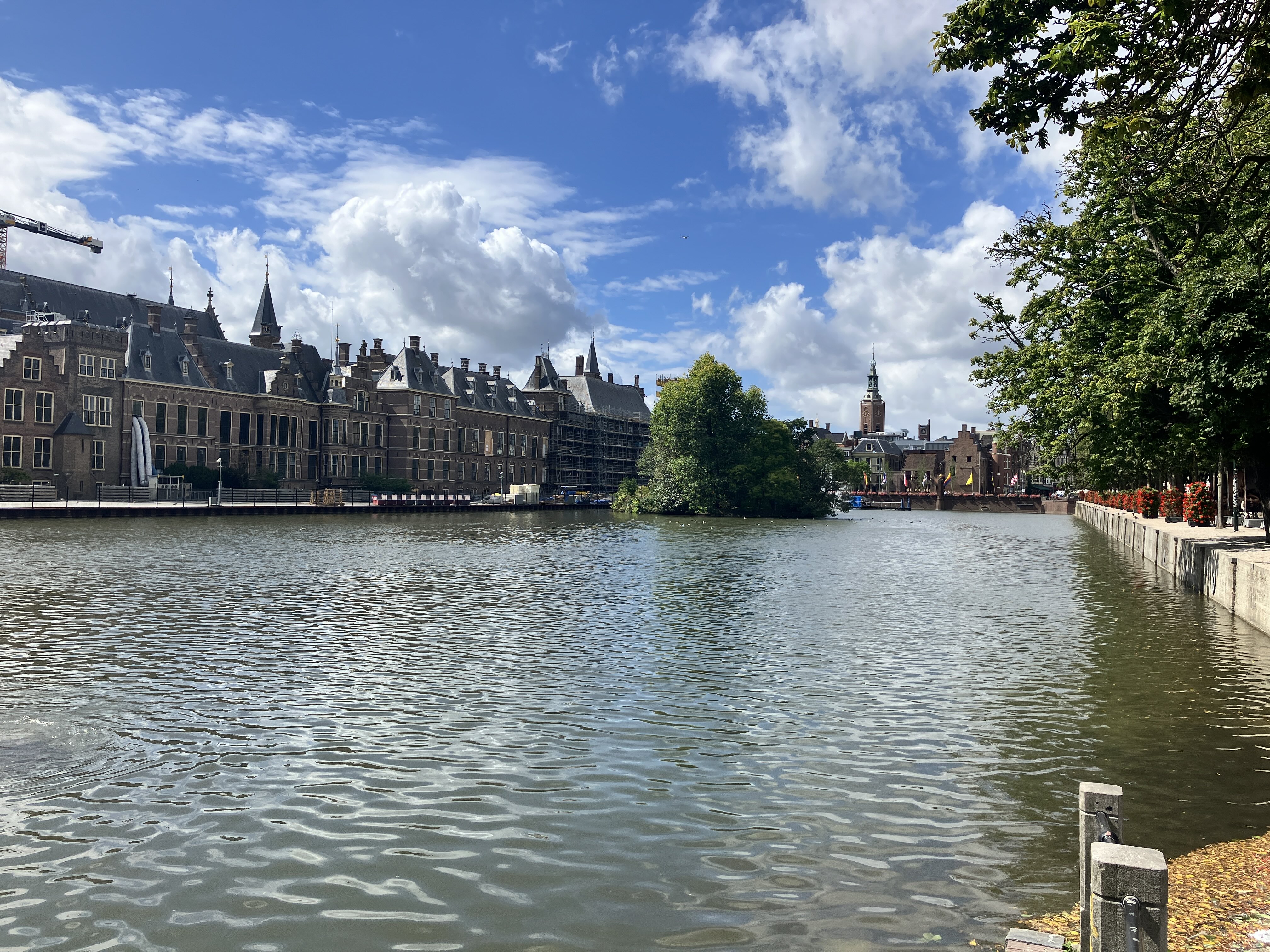
Learning to See the Dutch Landscape
I have always been particularly drawn to the landscape paintings of Hobbema, Jacob van Ruisdael and Aelbert Cuyp. When you travel through the Netherlands, you can still recognize so much of what they painted.
The clouds are perhaps the first thing I notice. On the right day, the formations can be extraordinary. There is also a particular quality of light in April and again around the end of September and October. Put that light over the Dutch landscape, and in April perhaps over the tulip fields, and the connection with the old paintings becomes very direct.
Then there is the engineering. Dikes keep the sea out. Mills help control the water. Land has been reclaimed and communities have been built where water once stood. Monks were already making dikes and creating artificial hills on which people could build.
It is a country that has spent centuries working with water rather than simply accepting what nature gives it.
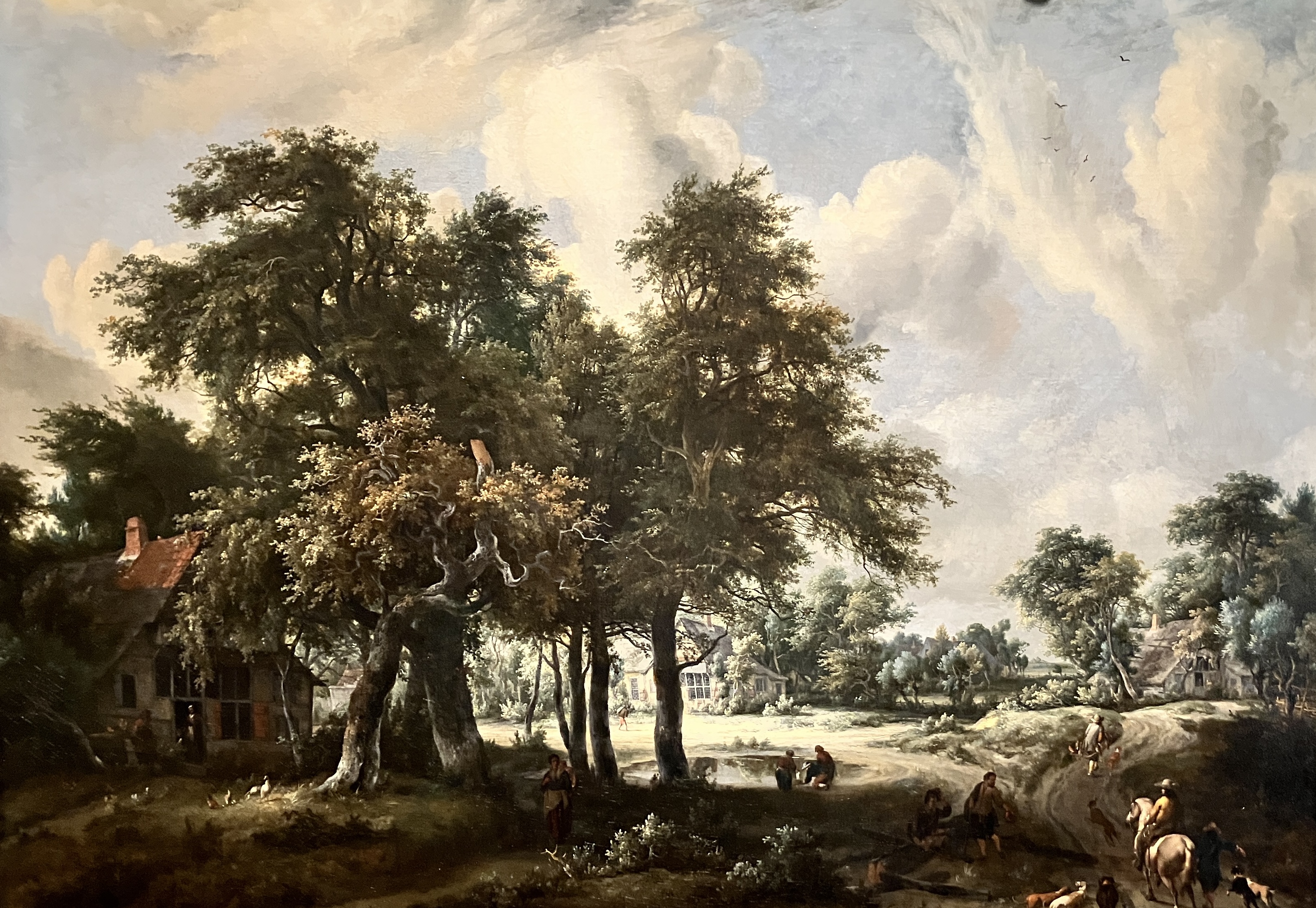
Looking at a Dutch Painting
I have been studying paintings and cultural history for nearly twenty years, including with the art dealers and museum directors Hans Smelik and Andries Stokking. I have also had the opportunity to talk and learn from specialists such as Fred G. Meijer.
What I love about Dutch painting is that there is always another detail. Look at Rembrandt's self-portraits and you can follow his changing technique over decades. Look closely at Frans Hals and suddenly the black clothing is no longer simply black. There are an astonishing number of shades and textures within it. Then there are the details that make these paintings feel surprisingly human. Saenredam could put a rather unexpected detail into an otherwise serious church interior. Jan Steen could be wonderfully mischievous.
The paintings also reveal how practical the artists were. Painters worked within ateliers and relied on one another. A landscape painter who was less confident with figures could have another artist contribute them. These were working people operating within a professional world.
The wealth behind Dutch trade made much of this possible. Merchants and wealthy families commissioned portraits, and the more elaborate the portrait, the more it could demonstrate status. A face was one thing. A hand, two hands or a full figure represented something different again. A whole family meant serious money.
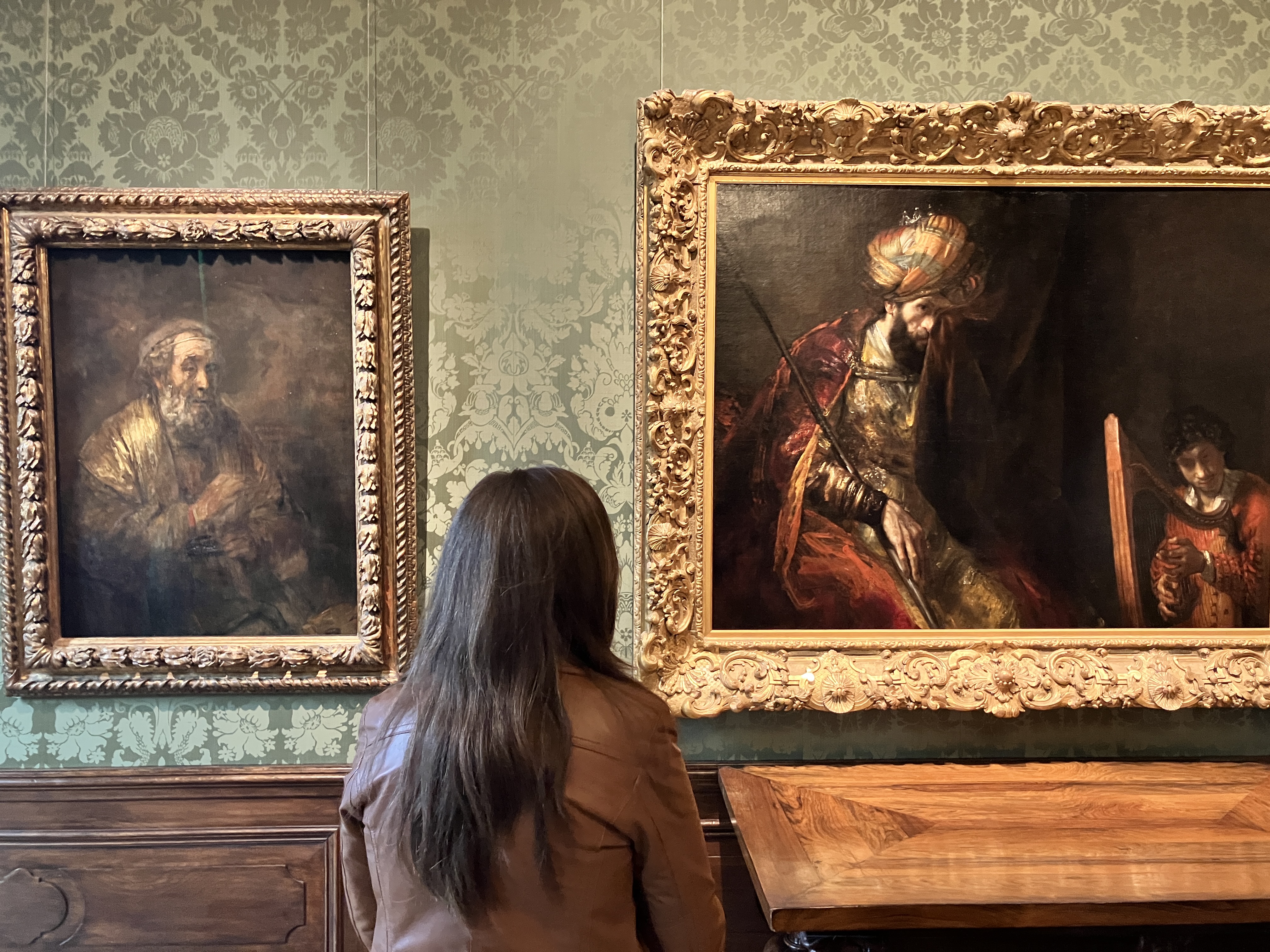
Where I Would Go Beyond Amsterdam
For someone visiting for the first time, I would start with The Hague. The Mauritshuis and Museum Bredius alone give you an extraordinary introduction to Dutch painting, and the city offers a very different atmosphere from Amsterdam.
If you are fortunate enough to obtain one of the rare opportunities to visit Palace Noordeinde, that adds another layer to the experience. We were able to visit when it was exceptionally opened to the public.
Then there is Haarlem, where I particularly love seeing Frans Hals's civil guard paintings in the museum that occupies his former home. Standing close to them, you can really see how he painted.
For something quieter, I would go north to Hindeloopen or Sloten in Friesland. It remains remarkably untouched and is still better known among Dutch, Frisian and German visitors than international travelers. Wooden shoes are still part of its identity.
That is what I like about travelling beyond Amsterdam. You begin with the museums and famous paintings, but eventually the paintings start to look like the country outside the window.
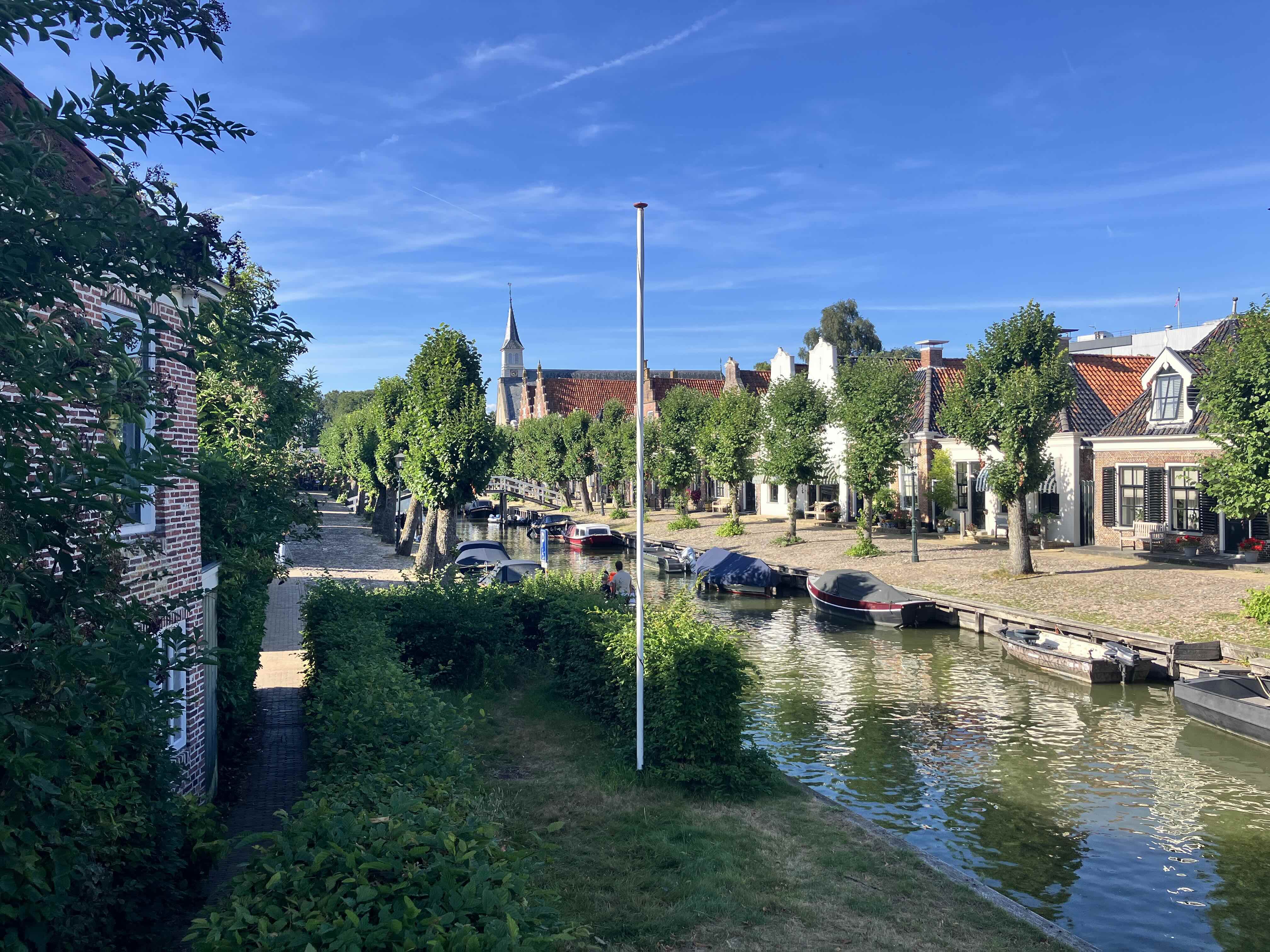
Discover the Netherlands Beyond Amsterdam
Amsterdam deserves its place on every first visit, but it is only one chapter of the Dutch story. Beyond the capital are historic cities, private art collections, quiet villages, remarkable landscapes and places where centuries-old traditions are still part of everyday life.
At DeSalvio Travel, we believe the most rewarding journeys come from understanding the places you visit. Robert, a Dutch native and lifelong student of art and cultural history, brings a particularly personal perspective to the Netherlands. From the masterpieces of the Dutch Golden Age to the landscapes that inspired them, from The Hague and Delft to Friesland and its historic villages, we can help you experience a side of the country that goes far beyond the usual itinerary.
Whether you are interested in Dutch painting, architecture, history, gastronomy, gardens or simply seeing a quieter and more authentic side of the Netherlands, we can create a journey around the things that genuinely interest you.

Robert Poortinga
Travel Booking Assistant
River cruise & Europe destination expert
Culinary and art travel specialist
Concert Pianist
_Black.png)