.svg)
Crossing the Alps: The Roads, Travellers and Musicians of Piedmont
The Mountains That Stopped Travellers
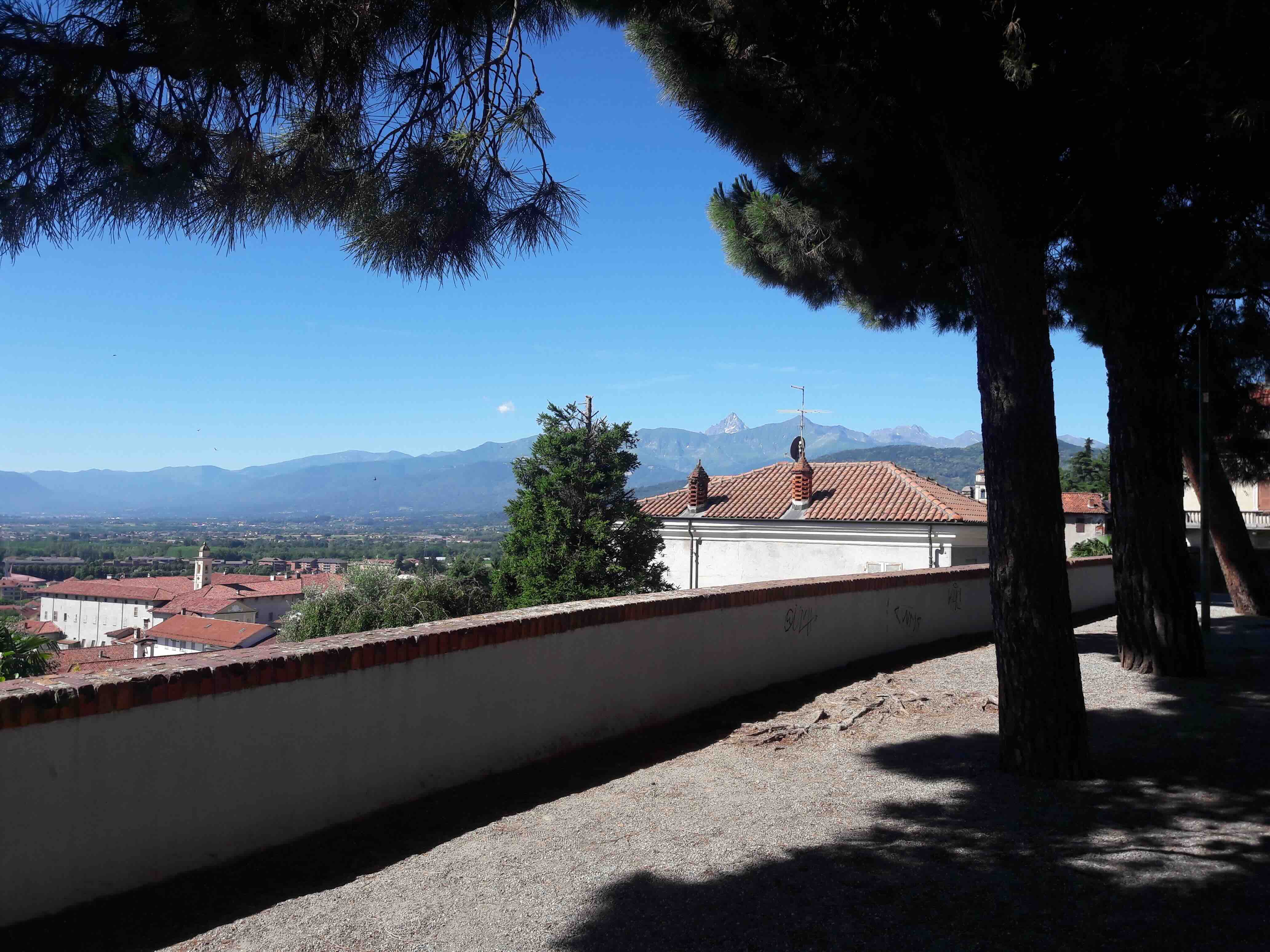
When we drive through the Alps today, it is easy to think of them as scenery. We look out of the window, take a photograph, perhaps stop for a coffee, and continue on a comfortable road. I am always conscious of how different this landscape once was. I have spent years researching how composers travelled through Europe for a book, and one of the things that still amazes me is what crossing the Alps actually involved. Before modern roads and railways, these mountains were an enormous obstacle. Carriages could not simply be driven over the passes. They could be dismantled and carried over difficult sections, while travellers continued on foot. For wealthy travellers there were sedan chairs. Animals carried luggage and parts of the carriage. The journey could take days, and accidents, bad weather and poor roads were genuine dangers.
There is something slightly absurd about imagining this while sitting in a heated car. I have had my own less serious experience of mountain travel. Once, during a snowstorm, I ended up in a huge pile-up and had to 'park' my car in about six feet of snow. It was messy. But I still had a heated car, modern roads and the possibility of calling for help. Mozart could find himself with a broken part of his carriage, like in the beginning of his grand tour in 1763, and have to improvise a repair before finding a smith or carpenter who could fix it. That is a very different idea of travelling.
Piedmont Was Never Isolated
The Alps made movement difficult, but they also explain much of Piedmont's importance. This was not simply a mountain region at the edge of Europe. Before Italy existed as a unified country, Piedmont sat between different political and cultural worlds, with connections towards France, Switzerland and the Italian states, and through Genoa towards the sea. The mountain passes became routes for merchants, diplomats, soldiers, aristocrats and musicians. They were also places where borders, taxes and laws became complicated. Goods moved across them, sometimes legally and sometimes not, 40% of the goods was contraband around 1750 in France. Garrisons and fortified positions existed because these routes mattered.
That mixture is part of what makes Piedmont so interesting to me. You can feel influences from neighbouring regions without losing the distinctly Piedmontese character of the place. Even the food reflects this complicated history. Some traditions that we now think of simply as Italian have much more complicated regional origins. The Alps were therefore both barrier and connection. They slowed people down, but they also forced people to pass through particular routes, bringing different languages, ideas, goods and cultures together. The man in the iron mask, the famous story and film about the prisoner in the time of Louis XIV was actually imprisoned in Pinerolo as this was the furthest town from Paris, making it ideal of political prisoners to be housed there.

The Travelling Musician
My interest becomes even stronger when musicians enter the story. Composers did not travel simply because they wanted to see Europe. Travel was part of their professional lives. Mozart travelled by carriage; Mendelssohn crossed the Alps; Goethe travelled extensively through Europe; Liszt spent enormous amounts of his life on the road. Paganini travelled constantly, as did opera companies and individual performers.
Their journeys could be extraordinary. They dealt with weather, illness, unreliable transport, uncomfortable accommodation and the constant problem of protecting their instruments and belongings. There is a wonderful contrast between the image we sometimes have of these composers as untouchable historical figures and the reality of people who had to get themselves, their luggage and their instruments from one place to another. That is something I try to keep in mind when researching them. We tend to put famous musicians on a pedestal. We see the successful composer or virtuoso and forget how uncertain their careers could be. Mozart, for example, could write extraordinary music and still find himself in a situation where a concert venture simply did not attract enough subscribers. Travel was part of that precarious life.
And the journeys themselves often became part of the music. Mendelssohn transformed his impressions of Italy and Scotland into music. Liszt's Années de pèlerinage is inseparable from his years of travelling. The Rhine became the subject of songs, symphonic music and legends. Composers saw landscapes, cities and people and processed those experiences in the language they knew best: music. That is one of the extraordinary things about musicians. They can take something they have experienced and turn it into something that other people can experience centuries later.
Looking at the Alps Today
Knowing this history does not mean that I look at every mountain road and imagine an old carriage struggling up the pass. But I can, if I want to. And sometimes that is enough to change the way I see the journey. When we travel through Piedmont today, we are moving through the same broad landscape that once demanded enormous physical effort from travellers. We can cover in an afternoon what previously took days. We can cross a mountain pass without dismantling a carriage. We can arrive warm, rested and ready for dinner. I am very grateful for that. But I also like knowing what came before us. It makes the landscape larger than what we can see from the road.
That is also why the music we bring to this journey matters. Some of the repertoire connects directly with Italian musical traditions: Liszt's opera paraphrases, bel canto fantasies by Henri Herz and music chosen by our guests themselves. We are listening to music shaped by a Europe in which musicians were constantly moving between countries, hearing new traditions and encountering new places. For me, that historical background makes everything broader. We are not simply driving through beautiful mountains, stopping for food and wine and attending a concert in a historic building. We are travelling through a landscape that generations of people struggled to cross. And then, after all that, we get to sit down at a piano and hear what some of those travellers made of the world they encountered.
Follow the history of Piedmont
- Piedmont, Italy: A DeSalvio Private Journey Through Music, Art, Wine and Savoy History
- Turin and the House of Savoy: Experiencing the Royal Side of Piedmont
- Pinerolo: The city that me fall in love with Piedmont
Discover Piedmont through music
See the art and places along the way
- The Art of Piedmont: Museums, Palaces and Hidden Collections
- The Langhe: Wine, Truffles and the Landscape of Piedmont
Travel through Piedmont differently
- A Different Way to Experience Piedmont: Music, Food, Culture and Time to Enjoy It
- Why Travel Through Piedmont Slowly? Art, Music and the Pleasure of Staying Longer
Explore the journey
Travel Through the Alps With Us
Our Piedmont journey is designed to give you time to experience the region rather than simply pass through it. Between the food, wine, historic residences, private concerts and mountain landscapes, there is space to understand where you are. For us, that context is part of the experience: knowing the people, journeys and history behind the places we visit makes Piedmont far more than a beautiful landscape outside the car window.

Robert Poortinga
Travel Booking Assistant
River cruise & Europe destination expert
Culinary and art travel specialist
Concert Pianist
_Black.png)